
Our Construction Association History
"No business is more exacting or requires greater effort and determination than construction. A lifetime may be spent in acquiring experience, judgement and accumulation of capital, equipment and efficient organization, only to have our enterprise meet with disasters of many kinds. . . The contractor is now merely an individual with no influence other than his own personality and his commercial weight. Organized, he can serve his own legitimate interests, open the gates for greater prosperity, benefit the country in normal times, and serve it royally in emergencies like the present."
Daniel A. Garber, first AGC of America president, 1918
AGC of America was established in 1918 after a request by President Woodrow Wilson. Wilson recognized the construction industry's national importance and desired a partner with which the government could discuss and plan for the advancement of the nation. AGC has been fulfilling that mission for more than 100 years. Carolinas AGC, established in 1922, was the first branch of the Associated General Contractors of America.
CAGC Timeline
Celebrating 100 Years - The History of Carolinas AGC
The First 50 Years
1920
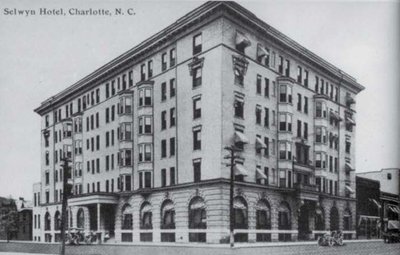
First meeting of local contractors at Selwyn Hotel in Charlotte.
1922
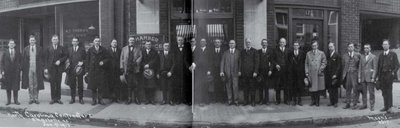
*North Carolina formal charter signed with AGC of America and Builders Exchange began in Charlotte office.
*V.P. Loftis becomes first paid Chapter Executive.
1925
South Carolina formal Charter signed with AGC of America.
1928
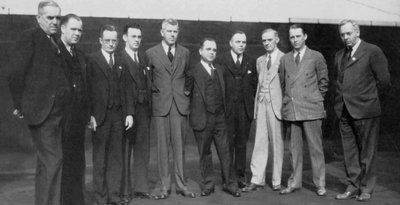
North and South Carolina combine to become Carolinas Branch of AGC.
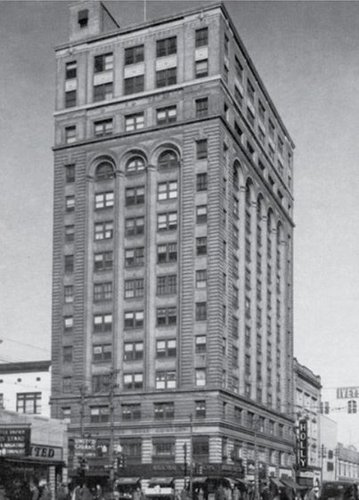
"That is what I remember the fondest...My association with the members. We were competitors but the AGC showed us we did not have to be enemies."
-Charles W. Angle, 1928 President
1936
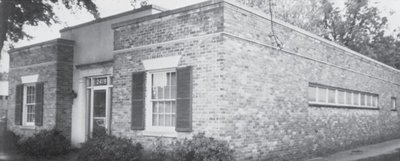
Raleigh and Columbia offices and Builders Exchange expansion.
1937
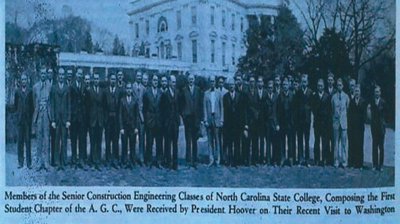
Harry H. Loving becomes Chapter Executive.
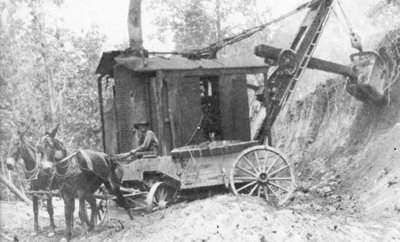
"Contractors were not highly regarded in those days. Builders were thought of as black sheep of the business complex. Well, black sheet is probably not quite correct. Bankers, merchants, professional people simply did not know how to judge us. Other businesses were owned and managed by "white-collar' men. We wore working clothes. Other businesses minimized financial risk, seldom took chances. We gambled on most every job; that was a natural part of construction. Not too many contractors were college men. A lot of folks were surprised to learn I had been graduated in 1919 from Vanderbilt."
-C. P. Street
1940
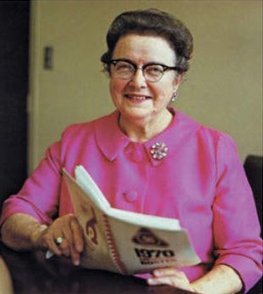
Ruth Sale & Harry Loving go to DC to secure work for contractors through Corps of Engineers.
1940
Frank H. Connor becomes Chapter Executive.
1946
Phillip T. Williams becomes Chapter Executive.
1947
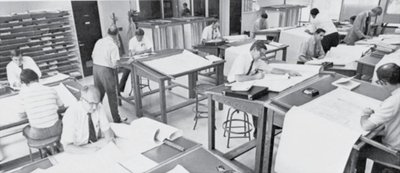
Robert Patton Becomes Chapter Executive and presides over significant program expansion.
1950s
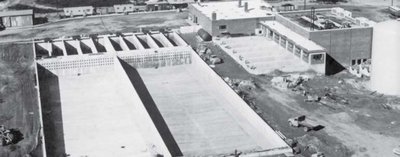
*Industrial relations program lead the fight and won to keep Carolinas predominantly open shop.
*Branch office expansions in Greensboro, Greenville and Charleston.
"No business is more exacting or requires greater effort and determination than construction. A lifetime may be spent in acquiring experience, judgement and the accumulation of capital, equipment and efficient organization, only to have our enterprise meet with disasters of many kinds - commercial or financial discrimination, confiscatory legislation, political extortion, predatory competition.
The Contractor is now merely and individual with no influence other than his own personality and his commercial weight. Organized, he can serve his own legitimate interests, open the gates for greater prosperity, benefit the country in normal times and serve it royally in emergencies like the present."
-Daniel Garber, from Letter to the first GC meeting in Chicago
1951
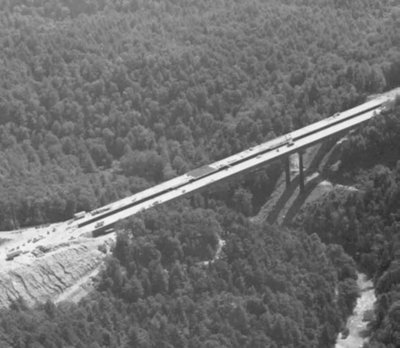
American Road Builders Association and the Carolinas Road Builders unit officially affiliate with CAGC.
1951
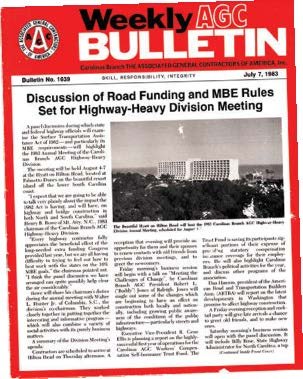
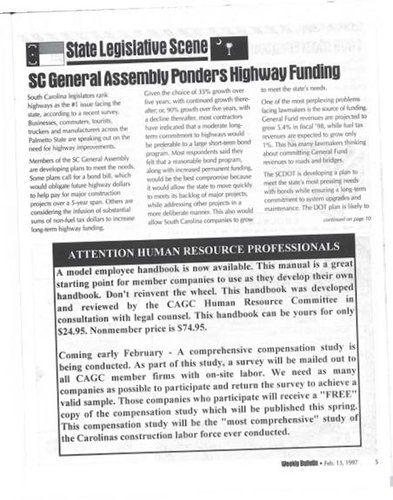
Weekly Bulletin publication debuts.
1960
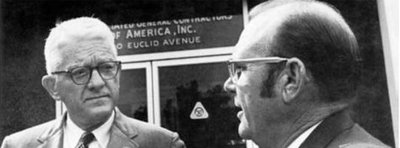
Henry Pierce becomes Chapter Executive.
1963
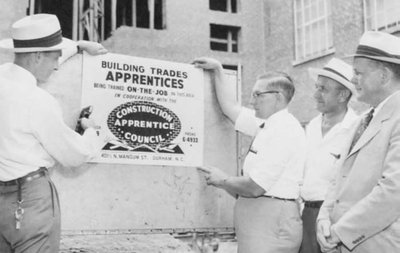
Formation of Education Division and Training Program receive new life.
1965
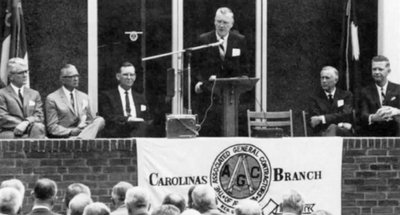
Relocation of headquarters to 1100 Euclid Ave. Charlotte, NC.
1966
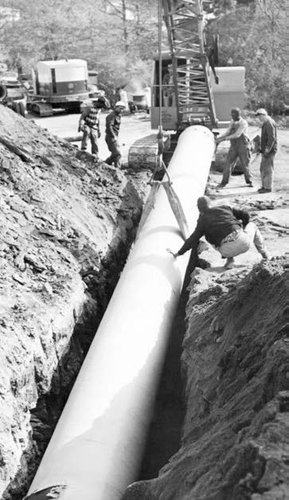
CAGC adds Utility Division.
1970
Gene Ellis becomes Chapter Executive.
"There was nothing glossy about the construction man of 50 years ago. He worked hard and long. He drove himself and his men. His calculator was a stubby pencil and common sense. In the field, his leadership was often measured by sheer physical strength and courage. Above all, he kept searching for new and better ways of doing things.
On the surface, much as changed and more will change in the coming years. Computers, management, marketing, machinery, are the norm. The contractor has traded his overalls for a shirt. Beneath the surface there still must beat the heart of a rugged individual; a willingness to risk; a determination to conquer the winds, rain and rock."
-Paul N. Howard, Jr, 1970 President (BOD Chair)
1970s
Legislative and regulatory advocated for fair business climate that would benefit the overall construction industry.